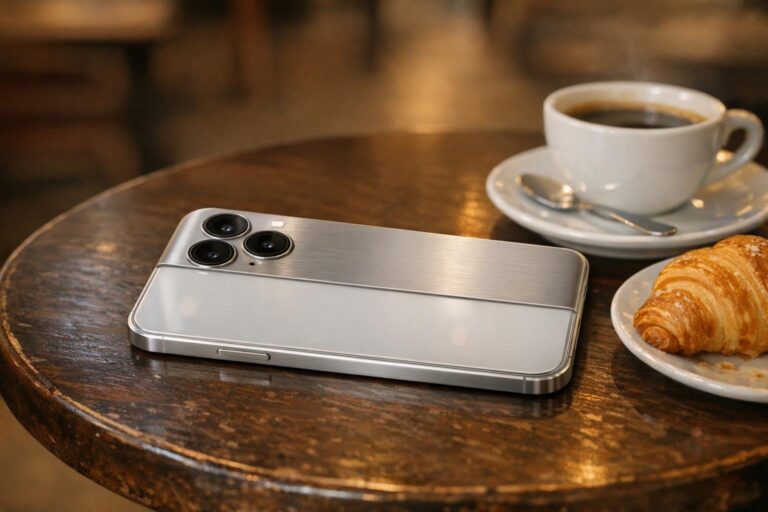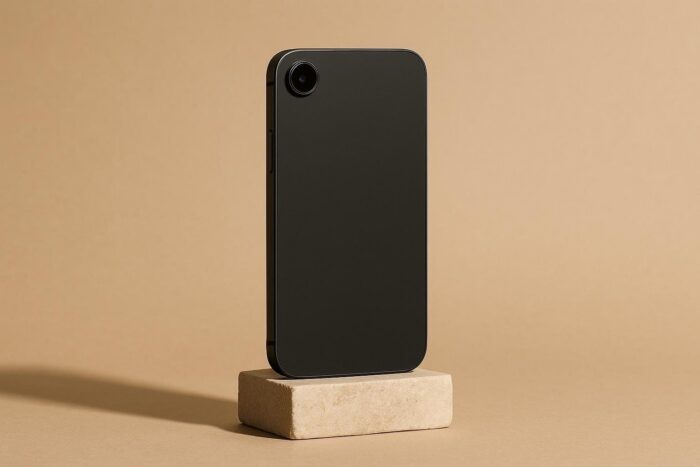
This iPhone 16e review is a synthesis: Apple’s official specifications, the published tests from major outlets at launch in February 2025, and how the phone stacks up against Apple’s lineup in September 2026. Short version: the 16e is a well-built phone with excellent battery life and a modern chip, held back by a few cuts that its successor has since fixed.
Apple sold the 16e from February 28, 2025 until March 2, 2026, when Apple announced its replacement, the iPhone 17e. If you are considering one today, you are almost certainly looking at refurbished, used or leftover stock.
iPhone 16e specs at a glance
| Spec | iPhone 16e |
|---|---|
| Launch price (US) | $599 (128GB), $699 (256GB), $899 (512GB) |
| Display | 6.1-inch Super Retina XDR OLED, notch, 60Hz |
| Chip and memory | A18 with 4-core GPU, 8GB RAM |
| Rear camera | 48MP Fusion, 2x optical-quality zoom |
| Front camera | 12MP TrueDepth |
| Modem | Apple C1, no mmWave 5G |
| Battery | About 3,961mAh, up to 26 hours video playback (Apple) |
| Charging | USB-C, Qi wireless, no MagSafe |
| Other | Face ID, Action button, Apple Intelligence |
What reviewers liked
Battery life
This was the most consistent point of praise. Apple rated the 16e at 26 hours of video playback, against 22 hours for the iPhone 16. Teardowns and spec reports put its battery at roughly 3,961mAh, the largest ever fitted in a 6.1-inch iPhone at the time and about 12% bigger than the iPhone 16’s. The more efficient C1 modem helps too.
The C1 modem
The 16e was the first iPhone with a cellular modem designed by Apple. Real-world tests published after launch found it broadly on par with the Qualcomm modem in the iPhone 16 for everyday use, with lower power draw. It does not support mmWave 5G, which only matters in a handful of dense US locations, and some lab comparisons showed lower peak download speeds than Qualcomm’s best chips.
Performance and Apple Intelligence
The A18 is the same generation of chip as in the iPhone 16, with one fewer GPU core. For apps, browsing and photo editing, reviewers found little practical difference. Graphics benchmarks and demanding games show the gap more clearly. The 8GB of RAM means full Apple Intelligence support, which set it apart from the iPhone SE it replaced.
A modern design for the entry model
Face ID, an OLED display, USB-C and the Action button brought Apple’s cheapest iPhone up to date. Compared with the Home-button era, it looks and feels like a current iPhone.
What reviewers criticized
- No MagSafe. This was the most cited omission. Magnetic chargers, wallets and car mounts do not attach, and wireless charging is limited to basic Qi. The 16e is the last iPhone without MagSafe.
- A single camera. The 48MP sensor produces sharp photos in good light and a usable 2x crop, but there is no ultra wide lens and no macro mode.
- The price. At $599, it started $170 above the last iPhone SE. Macworld headlined its review “a confusing mix,” a fair summary of the debate over value.
- Older design cues. A notch rather than the Dynamic Island, a 60Hz display and no Camera Control button.
iPhone 16e vs iPhone 17e and iPhone 16
The comparison has changed since launch. The iPhone 17e, released March 11, 2026, keeps the same 6.1-inch format but adds MagSafe and Qi2 charging, the A19 chip, the C1X modem and 256GB of base storage. It launched at $599 and costs $699 since Apple’s September 9, 2026 price increase.
The iPhone 16, still sold by Apple at $799 for 128GB in September 2026, offers an ultra wide camera, Dynamic Island, MagSafe and Camera Control, but has a shorter rated battery life than the 16e.
For the full picture of what the 16e changed compared with the old SE, including the upgrade question for SE owners, read our guide to the iPhone 16e.
Is the iPhone 16e worth buying in 2026?
Yes, at the right price. It still runs the latest software (Apple lists it as compatible with iOS 27), supports Apple Intelligence and has battery life that holds up well against newer models. If a refurbished or used unit costs clearly less than a new iPhone 17e, it is a sensible choice for a first iPhone, a work phone or a parent moving off a Home-button model.
If the price gap is small, pick the 17e: MagSafe and double the storage are worth the difference. And if you still want the small size and Touch ID of the older budget models, our iPhone SE overview covers each generation and what it can still do.
Before buying second-hand, check the battery health figure in Settings, confirm the phone is not locked to a carrier or an Apple Account, and make sure the storage is enough for you: the 128GB base model fills up quickly with 48MP photos and 4K video.
Our verdict
- Buy it if: you want long battery life, Face ID and Apple Intelligence at the lowest possible cost.
- Skip it if: you use MagSafe accessories, want an ultra wide camera, or can afford the 17e at a similar price.
iPhone 16e review FAQ
Is the iPhone 16e battery good?
Yes. It was one of the most praised aspects at launch, with Apple rating it at 26 hours of video playback, four more than the iPhone 16.
Is the iPhone 16e good for photos?
For everyday shots, yes. Its 48MP main camera handles daylight, portraits and night mode well, but it has no ultra wide or macro option.
How long will the iPhone 16e get updates?
Apple does not publish an end date. It is on the iOS 27 list, and recent iPhones have typically received major updates for many years after release.