In the iPhone 16 Pro vs 17 Pro comparison, the newer phone wins on cameras, battery life and sustained performance, while the older one is lighter, thinner and wrapped in titanium. The 17 Pro’s 48MP 4x telephoto with an 8x optical-quality setting, its 18MP front camera and up to 33 hours of video playback (against 27) are the changes most owners will notice.
Both are now out of Apple’s lineup: the 16 Pro left in September 2025, the 17 Pro in September 2026 when the iPhone 18 Pro arrived. So the real question is which one to buy used or refurbished, and whether a 16 Pro owner gains enough by moving up.
Side-by-side specs
| Feature | iPhone 16 Pro | iPhone 17 Pro |
|---|---|---|
| Released | September 2024 | September 19, 2025 |
| Launch price (US) | $999 for 128GB | $1,099 for 256GB |
| Storage | 128GB, 256GB, 512GB, 1TB | 256GB, 512GB, 1TB |
| Chip | A18 Pro | A19 Pro, with vapor chamber cooling |
| Display | 6.3-inch, 120Hz, 2,000 nits outdoor peak | 6.3-inch, 120Hz, 3,000 nits outdoor peak |
| Main camera | 48MP, 24 mm, f/1.78 | 48MP, 24 mm, f/1.78 |
| Ultra wide | 48MP, 13 mm | 48MP, 13 mm |
| Telephoto | 12MP, 5x (120 mm) | 48MP, 4x (100 mm), 8x crop at 200 mm |
| Front camera | 12MP | 18MP Center Stage |
| Video playback | Up to 27 hours | Up to 33 hours |
| Frame | Titanium | Aluminum unibody |
| Size | 149.6 x 71.5 x 8.25 mm | 150.0 x 71.9 x 8.75 mm |
| Weight | 199 g | 206 g |
Figures from Apple’s technical specifications for each model (US versions).
Cameras: the telephoto makes the difference
The main and ultra wide cameras are on paper the same: 48MP each, same focal lengths and apertures. The difference is the telephoto. The 16 Pro uses a 12MP 5x lens at 120 mm; the 17 Pro switches to a 48MP sensor at 100 mm, 56 percent larger according to Apple, and adds a 12MP 8x crop at 200 mm. Net result: more detail at 4x and a much longer reach at 8x, with only a small loss at the 5x position.
The selfie camera is the other upgrade. The 17 Pro’s 18MP Center Stage sensor widens the frame for groups and shoots horizontal selfies with the phone held upright, where the 16 Pro has a conventional 12MP camera.
For video, both record 4K Dolby Vision at 120 fps, ProRes and Log. The 17 Pro adds ProRes RAW, Apple Log 2 and genlock support. These matter to creators; casual users will see little change.
Battery and performance
Apple’s rating rises from 27 to 33 hours of video playback, helped by a larger battery that the 17 Pro’s raised camera plateau makes room for. The A19 Pro is faster than the A18 Pro, but the more meaningful change is the vapor chamber: Apple says it delivers up to 40 percent better sustained performance, which helps in long gaming sessions, video exports and recording in hot conditions.
Charging is close: both support MagSafe up to 25W, and the 17 Pro reaches 50 percent in 20 minutes with a 40W or higher USB-C adapter.
Design and display
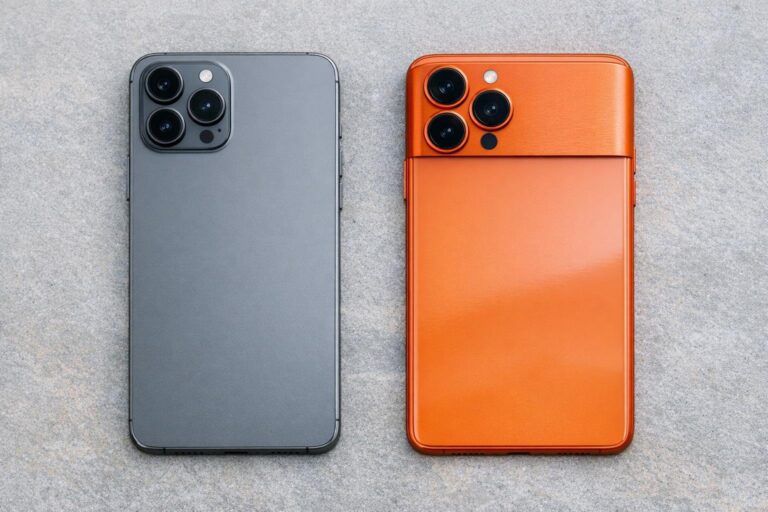
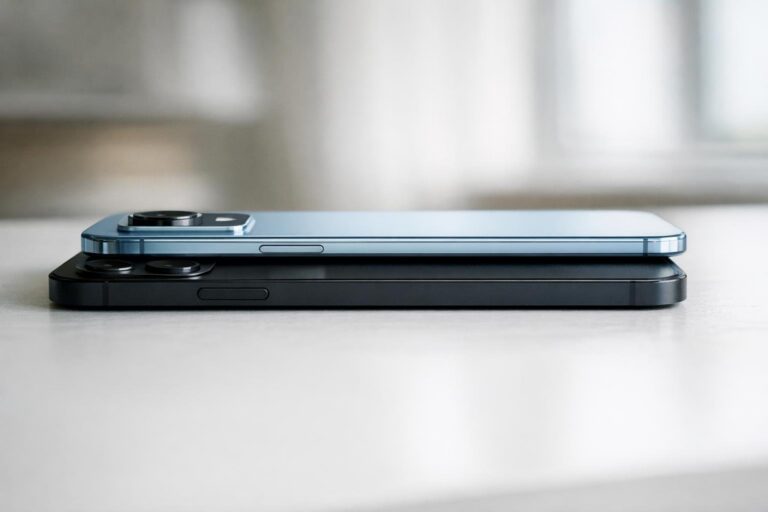
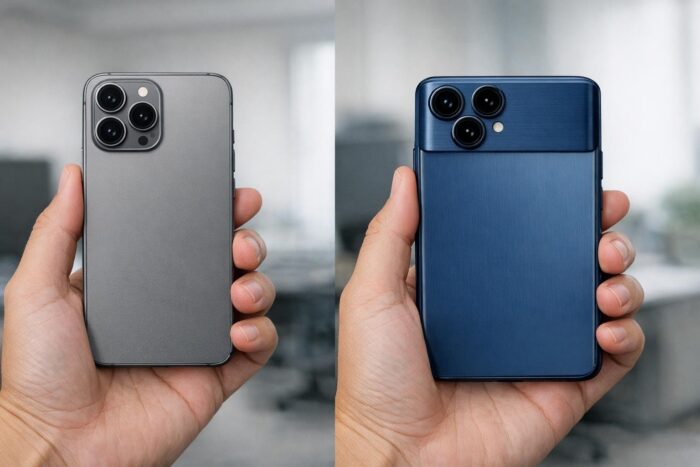
This is where opinions split. The 16 Pro’s titanium frame and matte glass back feel premium and resist marks well. The 17 Pro’s aluminum unibody is better at dissipating heat but is thicker (8.75 mm against 8.25 mm), 7 g heavier, and more prone to scuffs on its edges. Its full-width camera plateau changes the look of the back entirely.
Both screens are 6.3-inch ProMotion OLED panels. The 17 Pro gets brighter outdoors (3,000 nits against 2,000) and a tougher Ceramic Shield 2 front, useful in direct sunlight and against scratches.
For a wider picture of the newer model, including colors and the Pro Max, see our page on what the Pro line adds over the standard models.
Should you upgrade from the iPhone 16 Pro?
- Upgrade if you zoom a lot, take many selfies or group shots, or find your battery running short by evening.
- Keep the 16 Pro if it still lasts the day and you mostly use the main camera. It runs the current iOS and its core camera is unchanged.
- Consider skipping a generation and going straight to the iPhone 18 Pro, which Apple sells from $1,199 for 256GB, if you want the newest hardware and longest software support.
Buying one now: which is the better deal?
Since neither is sold new by Apple, compare prices on refurbished or used units. The 17 Pro is the more future-proof choice and starts at 256GB, so a used 128GB 16 Pro is not a like-for-like comparison. If the price gap is small, take the 17 Pro; if it is large and you rarely zoom, the 16 Pro is still a very capable phone.
If you do not need a telephoto at all, a new budget model can make more sense than either. In October 2026 Apple sells the iPhone 17e from $699 for 256GB with the current A19 chip and a 48MP main camera. Our guide to Apple’s entry-level phone and who it fits lays out what you give up.
FAQ
Is the iPhone 17 Pro better than the iPhone 16 Pro?
Yes, on cameras (telephoto and selfie), battery life, cooling and outdoor brightness. The 16 Pro keeps the edge on weight, thickness and its titanium build.
Do the iPhone 16 Pro and 17 Pro have the same screen size?
Yes, both have a 6.3-inch ProMotion display up to 120Hz. The 17 Pro is brighter outdoors.
Is the iPhone 17 Pro heavier than the 16 Pro?
Slightly: 206 g against 199 g, and 0.5 mm thicker.
Can I still buy either phone from Apple?
No. Apple’s current Pro models are the iPhone 18 Pro and 18 Pro Max. Both older phones are available refurbished or used.