The iPhone 13 mini is the smallest Face ID iPhone Apple ever made, and it is no longer on sale at Apple. It launched in September 2021 at $699, stayed in the lineup at a reduced $599 after the iPhone 14 arrived, and was discontinued on September 12, 2023, when the iPhone 15 was announced. No mini model has replaced it.
Five years later, it still has a loyal following. It runs iOS 27, it has an OLED screen and a dual camera, and it fits in a jeans pocket like almost nothing else. The catch is a small battery, no Apple Intelligence, and the fact that you can only buy it used or refurbished.
So is it still a smart buy in late 2026, and how does it compare with Apple’s other compact phone, the iPhone SE? Here is the full picture.
Where the iPhone 13 mini sits in Apple’s lineup today
Apple’s current range, as of late September 2026, starts at the iPhone 17e and runs through the iPhone 16, iPhone 17, iPhone Air, iPhone 18 Pro, iPhone 18 Pro Max and the new foldable iPhone Duo. Among Apple’s regular phones, the smallest screen is 6.1 inches, on the iPhone 17e and iPhone 16. The iPhone Duo does have a 5.4-inch cover screen, but folded it is 84 mm wide, 11.3 mm thick and weighs 254 g, so it is not a compact phone in the mini sense. The iPhone 17e now starts at $699 for 256GB, after Apple raised the prices of several models by $100 on September 9, 2026.
In other words, the phone that Apple sells today at the old iPhone 13 mini launch price is a much larger device. Anyone who wants a 5.4-inch iPhone has to look at the second-hand market, which means the iPhone 13 mini or the older iPhone 12 mini.
iPhone 13 mini specs at a glance
Apple’s official spec sheet shows how much hardware was packed into a very small body. It uses the same A15 Bionic chip as the regular iPhone 13 and the third-generation iPhone SE.
| Spec | iPhone 13 mini |
|---|---|
| Display | 5.4-inch OLED, 2340 x 1080, 476 ppi, 60Hz |
| Brightness | 800 nits typical, 1200 nits HDR peak |
| Chip | A15 Bionic, 6-core CPU, 4-core GPU |
| Rear cameras | 12MP Wide (f/1.6, sensor-shift stabilization) and 12MP Ultra Wide |
| Front camera | 12MP TrueDepth, Face ID |
| Storage | 128GB, 256GB, 512GB |
| Battery (Apple rating) | Up to 17 hours of video playback |
| Size and weight | 131.5 x 64.2 x 7.65 mm, 141 g |
| Durability | Ceramic Shield front, IP68 (6 meters for up to 30 minutes) |
| Connectivity | 5G, MagSafe, Lightning port |
| Launch price | $699 (128GB), $799 (256GB), $999 (512GB) |
It came in six colors: (PRODUCT)RED, Starlight, Midnight, Blue, Pink, and a Green finish added in March 2022.
iPhone 13 mini vs iPhone SE: two very different compact iPhones
For years, Apple sold two small phones side by side. The comparison still matters, because both are now bought mostly used or refurbished, and both sit in a similar price bracket. If the Home button and a lower price appeal to you, read our guide to the iPhone SE before you decide.
| iPhone 13 mini | iPhone SE (3rd gen, 2022) | |
|---|---|---|
| Screen | 5.4-inch OLED, edge to edge | 4.7-inch LCD, with bezels |
| Unlock | Face ID | Touch ID (Home button) |
| Chip | A15 Bionic | A15 Bionic |
| Rear cameras | Dual 12MP (Wide + Ultra Wide) | Single 12MP |
| Size | 131.5 x 64.2 x 7.65 mm | 138.4 x 67.3 x 7.3 mm |
| Weight | 141 g | 144 g |
| Video playback (Apple) | Up to 17 hours | Up to 15 hours |
| Water resistance | IP68 | IP67 |
| Launch price | $699 | $429 |
| Status | Discontinued September 2023 | Discontinued February 2025 |
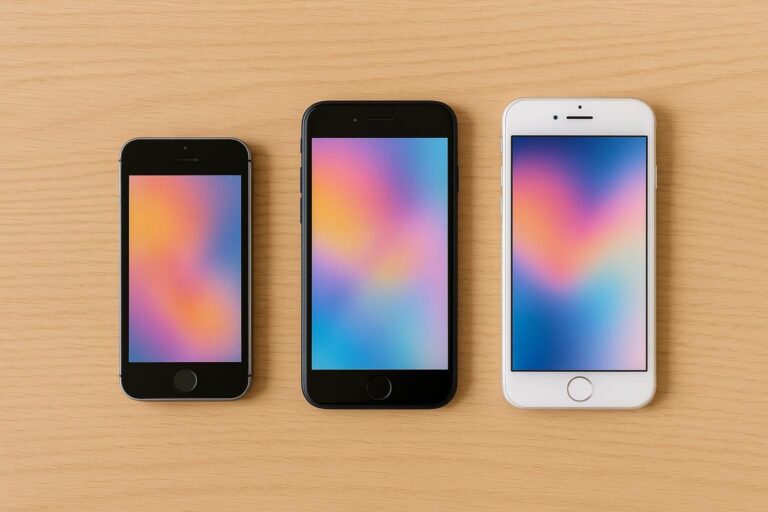
The surprise for many people is that the iPhone 13 mini is physically smaller and lighter than the iPhone SE, while offering a larger screen. The OLED panel is also sharper and brighter than the SE’s LCD, and the second camera gives you ultra-wide shots and a better Night mode.
The SE keeps a few arguments: Touch ID for people who dislike Face ID, a familiar Home button, and a lower resale price. It was replaced in February 2025 by the iPhone 16e, which is a 6.1-inch phone and no longer a compact one.
What the iPhone 13 mini still does well
A genuinely one-handed phone
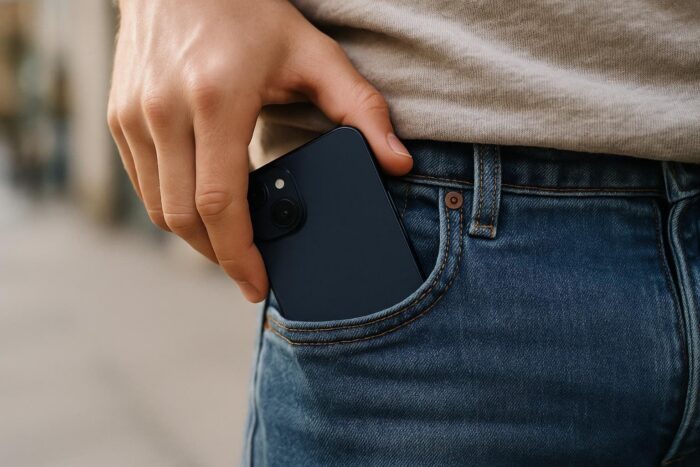
At 64.2 mm wide, most people can reach the whole screen with their thumb. The iPhone 17e, one of the smallest iPhones Apple sells new today, is 71.5 mm wide and weighs 169 g. For runners, for small hands, or for anyone tired of phones that stretch pockets, that difference is real.
Performance that holds up
The A15 Bionic still powers the iPhone 13 mini through everyday apps, streaming, maps and casual games without trouble. It is the same chip Apple used in the iPhone SE until early 2025, which says a lot about how well it has aged.
Cameras that are still good
The main sensor with sensor-shift stabilization, Night mode on both rear lenses, Cinematic mode video and 4K Dolby Vision HDR recording are features you would expect from a much more recent phone. Photos will not match an iPhone 18 Pro, but they remain solid for social media and family pictures.
Software support in 2026
Apple’s list of devices compatible with iOS 27, released on September 14, 2026, includes the iPhone 13 mini. You keep new features, security patches and app compatibility. Apple never announces an end date in advance, so nobody can say for sure how many more major versions it will get.
The weak points to know before buying
- Battery life. The battery was a known weak spot even when the phone was new. Reviews in 2021 found it better than the iPhone 12 mini (GSMArena gave it a 75-hour endurance rating, six hours more than its predecessor), yet still behind larger iPhones. On a used unit, battery wear makes this worse.
- No Apple Intelligence. Apple’s AI features require an iPhone 15 Pro or newer. The 13 mini runs iOS 27, but without that feature set.
- 60Hz screen. Scrolling is not as smooth as on the 120Hz ProMotion displays found on Pro models.
- Lightning, not USB-C. You will need a Lightning cable, while every current iPhone uses USB-C.
- Used only. Apple no longer sells it, so warranty and condition depend on the seller.
How much does an iPhone 13 mini cost in 2026?
Prices depend heavily on condition and storage. In late September 2026, Back Market’s US price guide listed refurbished 128GB units from $246 in Fair condition to $355 in Excellent condition, and 256GB units starting around $307. Swappa reported average used sale prices of $265 for 128GB and $301 for 256GB in August 2026.
That puts a good iPhone 13 mini well below the $699 starting price of a new iPhone 17e. If you buy one, look for a battery health above 85% or a recent battery replacement, and a seller warranty of at least a year.
Should you buy an iPhone 13 mini in 2026?
Buy it if size is your top priority. It is the most compact modern iPhone with Face ID and OLED, it still gets the latest iOS, and it costs a fraction of a new model. Pair it with a fresh battery and it can still be a very pleasant daily phone.
Skip it if you are a heavy user who needs a full day of screen time without a top-up, if you want Apple Intelligence, or if you plan to keep your phone for four or five more years. In that case, the iPhone 17e is the safer long-term bet, even if it is much bigger.
Compared with the iPhone SE, the 13 mini is the better phone in almost every respect. The SE only wins on price and on Touch ID.
FAQ
Is the iPhone 13 mini discontinued?
Yes. Apple stopped selling it on September 12, 2023, when it announced the iPhone 15. It was the last mini iPhone, and there is no mini model in the 2026 lineup.
Does the iPhone 13 mini support iOS 27?
Yes. It is on Apple’s official iOS 27 compatibility list. Apple Intelligence features are not available on it, though.
Is the iPhone 13 mini smaller than the iPhone SE?
Yes. It is 131.5 mm tall and 141 g, versus 138.4 mm and 144 g for the 2022 iPhone SE, while offering a bigger 5.4-inch screen.
Is the iPhone 13 mini waterproof?
It is water resistant, rated IP68 for up to 6 meters for 30 minutes. That rating applies to a new phone; seals can weaken with age or after a repair.